
Athlete Functional Assessment
Identify Sub-Optimals.
Move Better. Stay Healthy. Perform With Confidence.
~ A Science-Backed Functional & Biomechanical Assessment for Athletes ~
At Prime Physio, our Athlete Functional Assessment is designed to identify physical limitations, movement inefficiencies, strength deficits, coordination challenges, and biomechanical patterns that may affect athletic durability and long-term performance.
This assessment helps athletes understand how their body moves, controls force, and handles the physical demands of sport. By combining clinical knowledge, sports science, and objective testing tools, we provide a clear picture of each athlete’s current functional capacity and identify what should be addressed to reduce injury risk and support better performance over time.
The goal is not simply to find problems. The goal is to create clarity, direction, and confidence so athletes know where to focus their training, recovery, and development.

What is the Athlete Functional Assessment?
The Athlete Functional Assessment is a comprehensive performance-focused evaluation that looks at how well an athlete’s body functions from a movement, strength, coordination, and biomechanical standpoint.
This assessment is not a medical diagnosis, physical therapy evaluation, or treatment session. Instead, it is designed to identify functional limitations and movement-related factors that may increase injury risk, limit athletic efficiency, or reduce overall performance potential.
We assess how the body moves, stabilizes, transfers force, controls position, and responds to sport-related demands. The information gathered helps guide smarter training decisions, injury prevention strategies, return-to-sport planning, and long-term athletic development.
Who Is This Assessment For?
The Athlete Functional Assessment is ideal for:
-
-
- Athletes preparing for an upcoming season
- Athletes returning to training after time off or injury
- Athletes with recurring discomfort, tightness, or movement limitations
- Athletes who feel something is “off” but do not know why
- Athletes who want to reduce injury risk
- Athletes who want to improve movement quality and durability
- Parents who want a better understanding of their athlete’s physical readiness
- Coaches who want objective information to support athlete development
-
This assessment is especially helpful for athletes who want to train more strategically instead of guessing what they need to work on.
How Our Athlete Functional Assessment Works
1. Subjective Assessment – Understanding the Athlete
Every assessment begins with a conversation.
Before we test movement, strength, or coordination, we want to understand the athlete behind the data. We discuss sport, position, training history, injury history, current workload, goals, concerns, and how the athlete currently feels about their body and performance.
This information helps us understand the specific demands placed on the athlete’s body and what outcomes matter most.
2. Objective Assessment – Establishing the Physical Baseline
Next, we assess the athlete’s current physical condition using objective clinical and performance-based measures.
Depending on the athlete, sport, and goals, this may include:
- 3D body scan and postural analysis
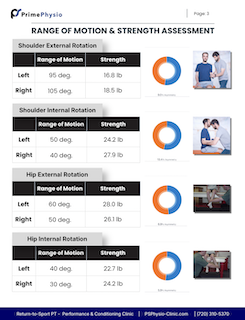
- Range of motion assessment
- Strength testing
- Side-to-side comparison
- Foundational physical capacity testing
These measurements help identify limitations, asymmetries, or physical characteristics that may influence movement quality, athletic durability, and injury risk.
3. Functional & Performance Assessment – Evaluating Movement Quality
After establishing the physical baseline, we evaluate how the athlete moves during functional and sport-relevant tasks.
This may include:
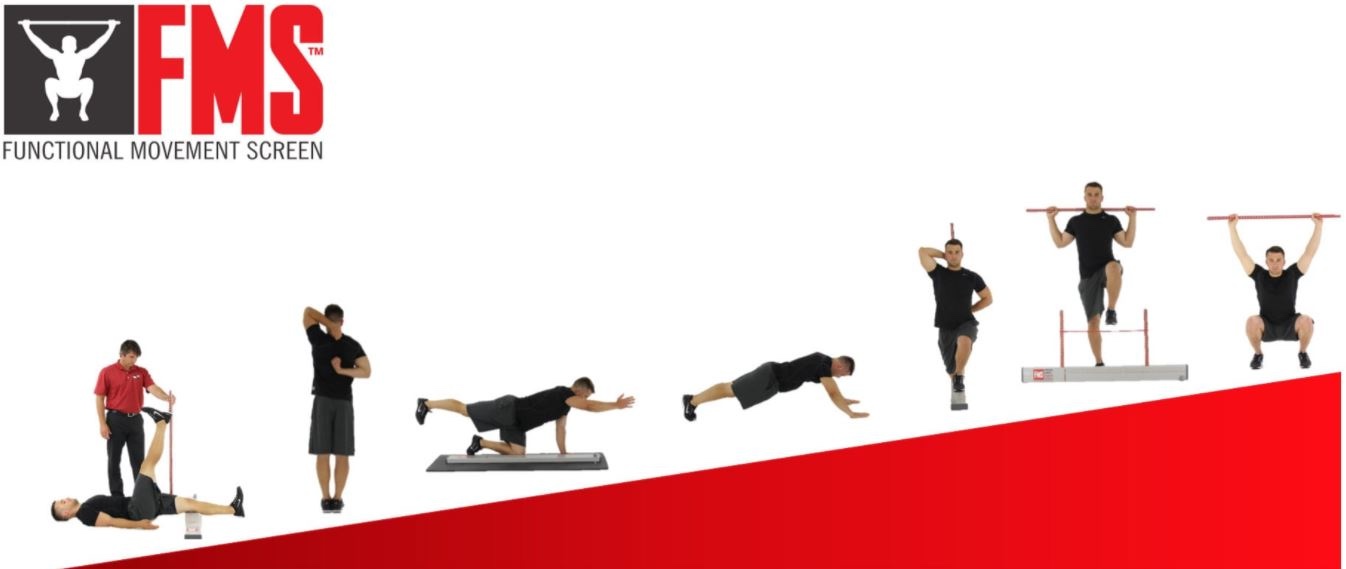
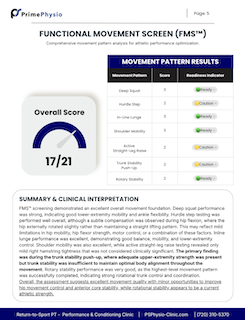
- Functional Movement Screen – FMS™︎
- Sport-specific movement analysis
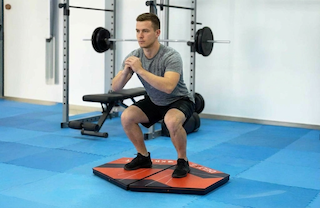
- Single-leg control testing
- Trunk and pelvis control assessment
- Landing, balance, and movement quality assessment
- Return-to-sport movement evaluation when appropriate
Rather than looking only at isolated measurements, we assess how the athlete controls their body during movement. This helps identify compensations, movement inefficiencies, and physical limitations that may affect performance or increase stress on the body.
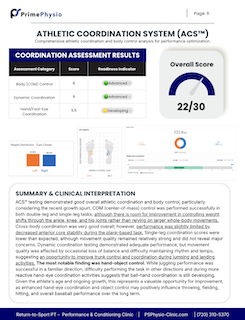
4. Athletic Coordination Assessment – ACS™
A key part of our system is the ACS™: Athletic Coordination System.
Athletic coordination is more than balance or agility. It is the ability to control the body, react to the environment, coordinate the eyes, hands, feet, trunk, and limbs, and perform movement efficiently under changing demands.
Through ACS™, we may assess:
- Center of mass control
- Single-leg control
- Dynamic movement control
- Reactive coordination
- Hand-eye coordination
- Foot-eye coordination
- Rhythm and timing
- Movement quality under task demand
This gives us insight into how well the athlete’s nervous system organizes movement, not just how strong or flexible they are.
For many athletes, this is the missing link between general fitness and true sport performance.
5. Functional Diagnosis & Performance Roadmap
Collecting data is not the goal. Making better decisions is the goal.
Using our FDS™ — Functional Diagnosis System — we organize the findings from the assessment to identify the most important factors affecting the athlete’s movement quality, durability, and performance readiness.
You will receive:
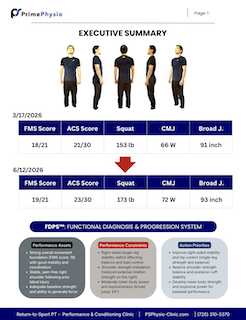
- A summary of key findings
- Objective testing results
- Identified strengths
- Primary areas for improvement
- Functional and biomechanical interpretation
- A prioritized roadmap based on your goals
- Recommendations for training, rehabilitation, recovery, or further evaluation when appropriate
The purpose is to help athletes and parents clearly understand what matters most and what should be addressed first.
What We Look For
During the Athlete Functional Assessment, we evaluate factors that may influence athletic durability, movement efficiency, and injury risk, including:
- Mobility and flexibility limitations
- Stability and motor control deficits
- Strength asymmetries
- Movement compensation patterns
- Trunk, pelvis, and limb control
- Single-leg control
- Coordination and timing
- Existing strengths that can be developed further
The goal is not to label every finding as a problem. The goal is to determine which findings actually matter for the athlete’s sport, goals, and long-term development.
What This Assessment Is — and Is Not
This assessment is:
- A functional and biomechanical assessment for athletes
- A performance-focused evaluation
- A tool to identify movement limitations and physical deficits
- A baseline for future comparison
- A guide for smarter training and injury prevention
- A useful step for return-to-sport planning
This assessment is not:
- A medical diagnosis
- A physical therapy evaluation
- A treatment session
- A replacement for sport-specific coaching
- A generic screening with scores but no interpretation
If pain, injury, or medical concerns are identified during the assessment, we may recommend a physical therapy evaluation or referral to another appropriate medical provider.
Why This Matters
Athletes often focus on outcomes: throwing harder, running faster, jumping higher, staying healthy, or returning to sport with confidence.
However, those outcomes are often influenced by underlying functional factors that are difficult to identify without a structured assessment process.
The Athlete Functional Assessment helps athletes:
- Understand how their body moves
- Identify limitations before they become bigger problems
- Reduce avoidable injury risk
- Improve movement efficiency
- Train with clearer priorities
- Track progress objectively over time
- Build confidence in their preparation
This assessment gives athletes a clear starting point and a smarter path forward.
How This Fits Into Our System
The Athlete Functional Assessment can serve as:
- A stand-alone functional evaluation
- A preseason screening
- A return-to-sport readiness assessment
- A starting point for performance development
- A baseline for future reassessment
- A decision-making tool for training, recovery, or rehabilitation planning
For athletes who want to continue improving after the assessment, the results can be used to guide individualized conditioning, corrective exercise, recovery work, or physical therapy when appropriate.
At Prime Physio, our goal is to help athletes not only recover, but move better, stay healthier, and build a body that is prepared for the demands of sport.
Athlete Functional Assessment
Move Better. Stay Healthy. Perform With Confidence.
Schedule your Athlete Functional Assessment today and gain a clearer understanding of
how your body functions, what may be limiting you, and where to focus next.