
Athlete Performance Assessment
Measure Performance. Track Progress. Maximize Potential.
~ A Science-Backed Athletic Performance Evaluation for Competitive Athletes ~
At Prime Physio, our Athlete Performance Assessment is designed to objectively measure athletic performance and identify opportunities for improvement.
Using advanced testing tools and evidence-based performance metrics, we evaluate how an athlete produces force, generates power, expresses strength, and performs key athletic tasks relevant to sport.
Whether you are preparing for a season, working toward a higher level of competition, returning after an injury, or simply looking to understand your athletic profile, this assessment provides objective data to help guide your development.
The goal is not to diagnose injuries or analyze movement limitations. The goal is to understand your athletic capacity, establish performance benchmarks, and create a roadmap for continued improvement.

What is the Athlete Performance Assessment?
The Athlete Performance Assessment is a comprehensive athletic testing session designed to evaluate the physical qualities that contribute to sport performance.
Rather than focusing on movement limitations or injury risk factors, this assessment focuses on measurable performance characteristics such as strength, power, explosiveness, force production, and athletic capacity.
The information gathered provides athletes, parents, coaches, and trainers with objective data that can be used to guide training decisions and monitor progress over time.
This assessment serves as a performance snapshot that can be repeated throughout the year to evaluate development and track improvements.
Who Is This Assessment For?
The Athlete Performance Assessment is ideal for:
-
-
-
- Athletes preparing for a season
- Athletes pursuing higher levels of competition
- Athletes looking to improve performance
- Athletes participating in strength and conditioning programs
- Athletes preparing for combines, showcases, tryouts, or recruitment opportunities
- Athletes returning to sport after rehabilitation and seeking performance benchmarks
- Parents who want objective performance data
- Coaches looking to monitor athletic development
-
-
This assessment is valuable for athletes of all levels, from youth athletes to collegiate and adult competitors.
How Our Athlete Performance Assessment Works
1. Subjective Assessment – Understanding the Athlete
Every assessment begins with a conversation.
Before testing performance, we want to understand the athlete behind the numbers.
We discuss:
- Sport and position
- Current training schedule
- Athletic history
- Previous injuries when relevant
- Current goals
- Areas where the athlete wants to improve
Understanding the athlete’s background helps us interpret performance results within the context of their sport, position, age, and goals.
2. Objective Assessment – Establishing the Baseline
Next, we perform a 3D body scan and general postural assessment to establish a baseline reference point.
This allows us to document the athlete’s current physical presentation and create a visual benchmark for future comparison.
While the primary focus of the Athlete Performance Assessment is athletic performance testing, the 3D scan provides valuable context when monitoring long-term development and physical changes over time.
3. Dynamic Warm-Up
Before testing begins, athletes complete a structured dynamic warm-up designed to prepare the body for high-performance activities.
This helps ensure testing is performed safely while allowing athletes to demonstrate their true athletic capacity during the assessment.
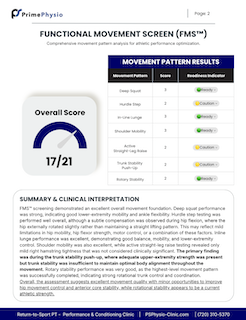
4. Functional Movement Screen (FMS™)
Many collegiate, professional, and high-level athletic organizations utilize movement screening as part of their athlete evaluation process.
As part of the Athlete Performance Assessment, we perform the Functional Movement Screen (FMS™) to evaluate fundamental movement patterns that support athletic performance.
The FMS™ provides valuable information regarding movement competency, mobility, stability, and overall movement quality, while also serving as a useful benchmark for future reassessments.
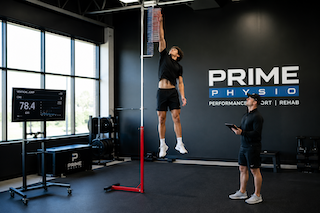
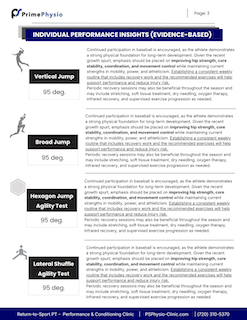
5. Jump Performance Assessment
Explosive power is one of the most important physical qualities in athletics.
To evaluate lower-body power production, we perform:
- Vertical Jump Test
- Standing Broad Jump Test
These assessments provide objective information regarding explosive strength, force production, and athletic power.
Results can be tracked over time to monitor improvements and guide future training priorities.
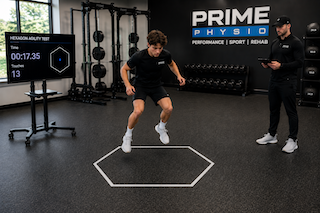
6. Speed & Agility Assessment
Athletic performance depends on more than strength and power.
Athletes must be able to accelerate, decelerate, change direction efficiently, and control their body during rapid movement.
Depending on the athlete and sport, testing may include:
- Hexagon Agility Test
- Lateral Shuffle Test
These assessments help evaluate agility, quickness, coordination, movement efficiency, and change-of-direction ability.
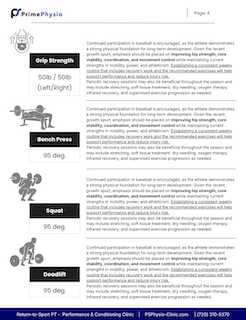
7. Strength Assessment
Strength remains one of the most important foundations of athletic performance.
We evaluate key strength qualities using objective testing measures such as:
- Grip Strength
- Big 3 Strength Assessment
- Squat
- Bench Press
- Deadlift
- Sport-Specific Strength Tests when appropriate
Testing is selected based on the athlete’s sport, training experience, and goals.
The purpose is to identify strengths, establish performance benchmarks, and determine opportunities for continued development.
8. Performance Analysis & Action Plan
Collecting data is only the beginning.
Using our FDS™ (Functional Diagnosis System) framework, we organize and interpret the assessment findings to identify the factors most relevant to athletic performance.
Athletes receive:
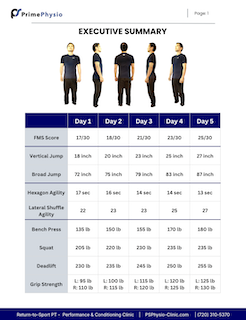
- Objective testing results
- Performance benchmarks
- Identification of athletic strengths
- Areas with the greatest opportunity for improvement
- Individualized recommendations
- A roadmap for future athletic development
Our goal is to transform testing results into practical information that helps athletes train smarter, track progress, and maximize their athletic potential.
What We Measure
The Athlete Performance Assessment focuses on the physical qualities most commonly associated with athletic success.
Depending on the athlete, sport, and goals, we may evaluate:
Explosive Power
- Vertical Jump
- Broad Jump
Speed & Agility
- Hexagon Agility Test
- Lateral Shuffle Test
Strength
- Grip Strength
- Squat
- Bench Press
- Deadlift
- Sport-Specific Strength Tests when appropriate
Movement Competency
- Functional Movement Screen (FMS™)
Together, these assessments provide an objective snapshot of the athlete’s current athletic performance and help identify opportunities for future improvement.
What This Assessment Is — and Is Not
This assessment is:
- A performance-focused athletic evaluation
- An objective measurement of athletic capacity
- A baseline for future performance tracking
- A tool for identifying strengths and development opportunities
- A valuable resource for athletes, parents, and coaches
This assessment is not:
- A medical diagnosis
- A physical therapy evaluation
- A rehabilitation session
- A comprehensive biomechanical assessment
- A replacement for sport-specific coaching
Athletes experiencing pain, injury, movement limitations, or recurring physical issues may benefit from our Athlete Functional Assessment or Physical Therapy Evaluation in addition to performance testing.
Why This Assessment Matters
Many athletes train hard but are unsure whether their training is producing meaningful results.
Objective testing provides clarity.
The Athlete Performance Assessment helps athletes:
- Establish a performance baseline
- Track progress over time
- Identify strengths and weaknesses
- Monitor off-season development
- Prepare for tryouts, combines, and competitive opportunities
- Make more informed training decisions
Rather than relying solely on how you feel, performance testing allows you to measure improvement objectively.
How This Fits Into Our System
The Athlete Performance Assessment can serve as:
- A stand-alone performance evaluation
- A preseason benchmark assessment
- An off-season development assessment
- A periodic progress check throughout the year
- A return-to-performance benchmark following rehabilitation
Many athletes choose to repeat the assessment periodically to monitor improvements and evaluate the effectiveness of their training program.
For athletes seeking a deeper understanding of movement quality, biomechanics, coordination, or injury-risk factors, we may recommend combining this assessment with our Athlete Functional Assessment.
Together, these assessments provide a comprehensive understanding of both how the athlete functions and how the athlete performs.
Athlete Performance Assessment
Measure Performance. Track Progress. Maximize Potential.
Schedule your Athlete Performance Assessment today and gain objective insight
into your athletic strengths, performance profile, and opportunities for continued development.